


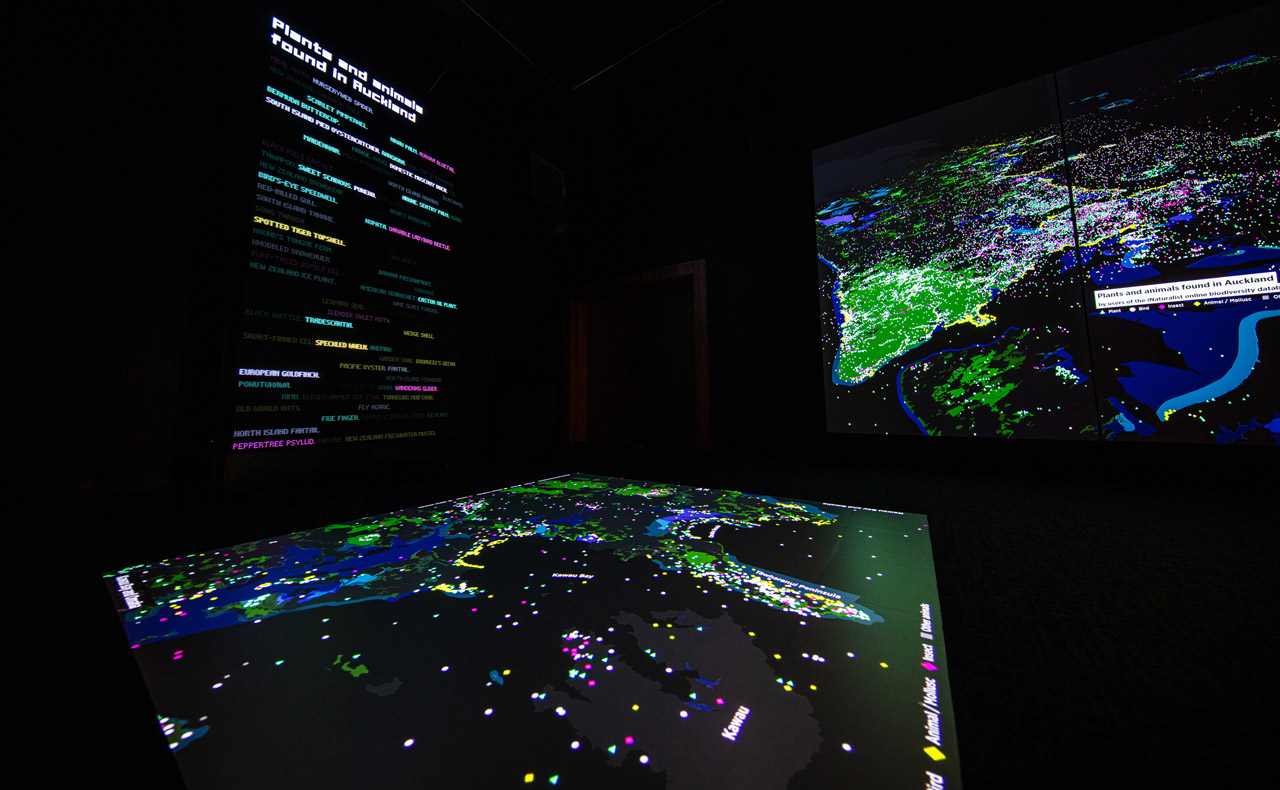
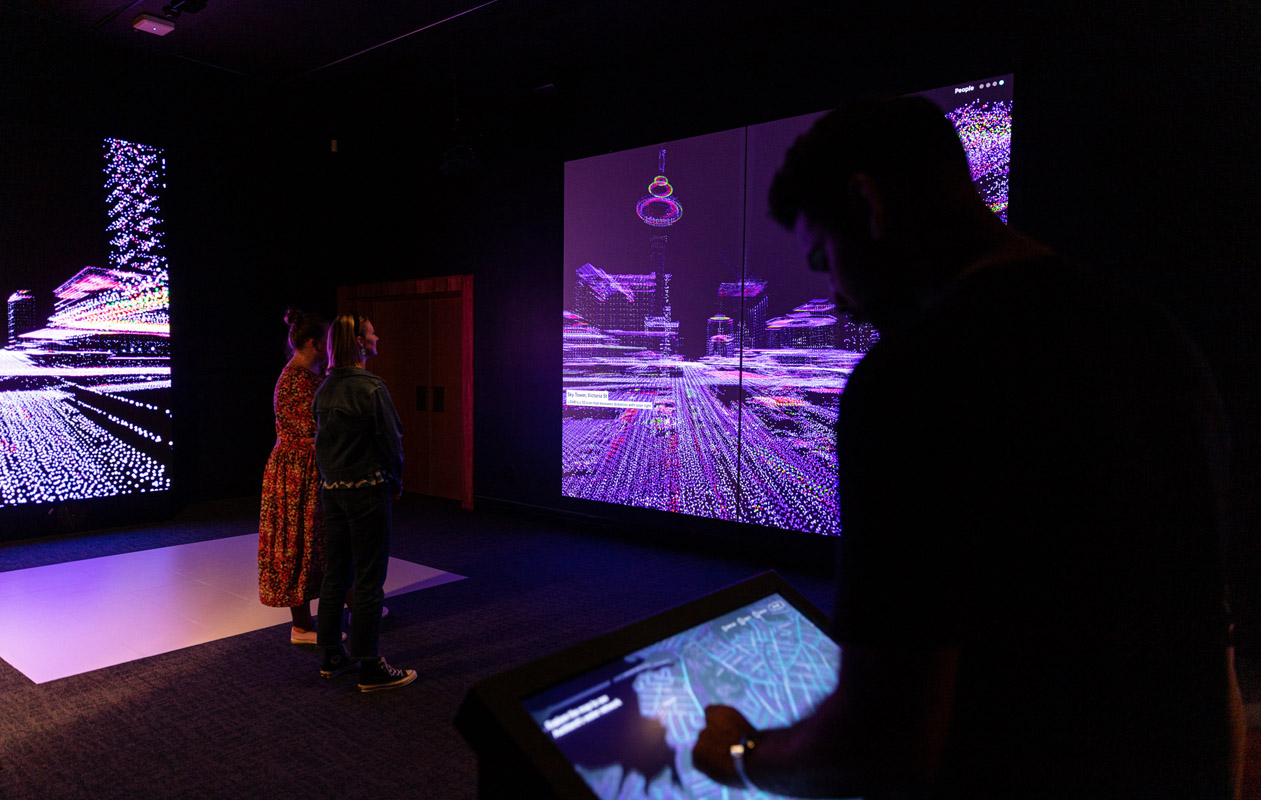
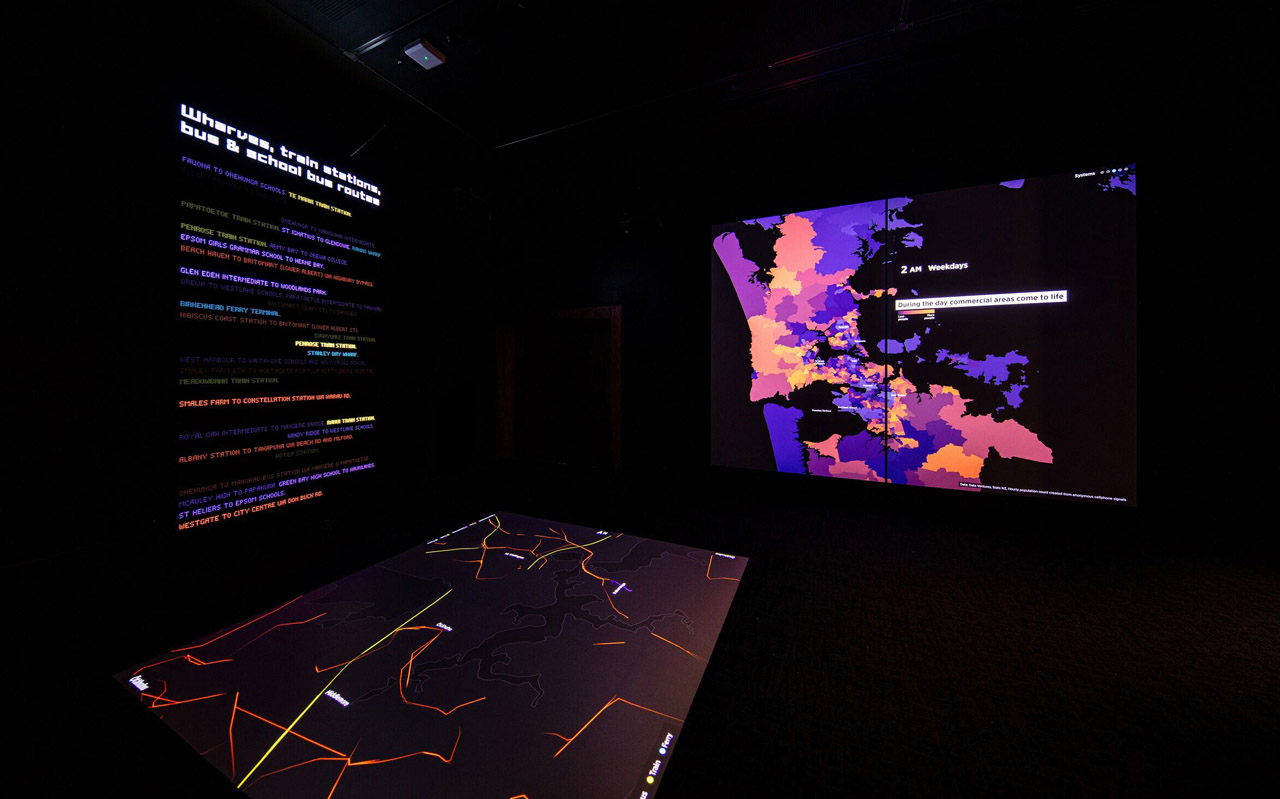
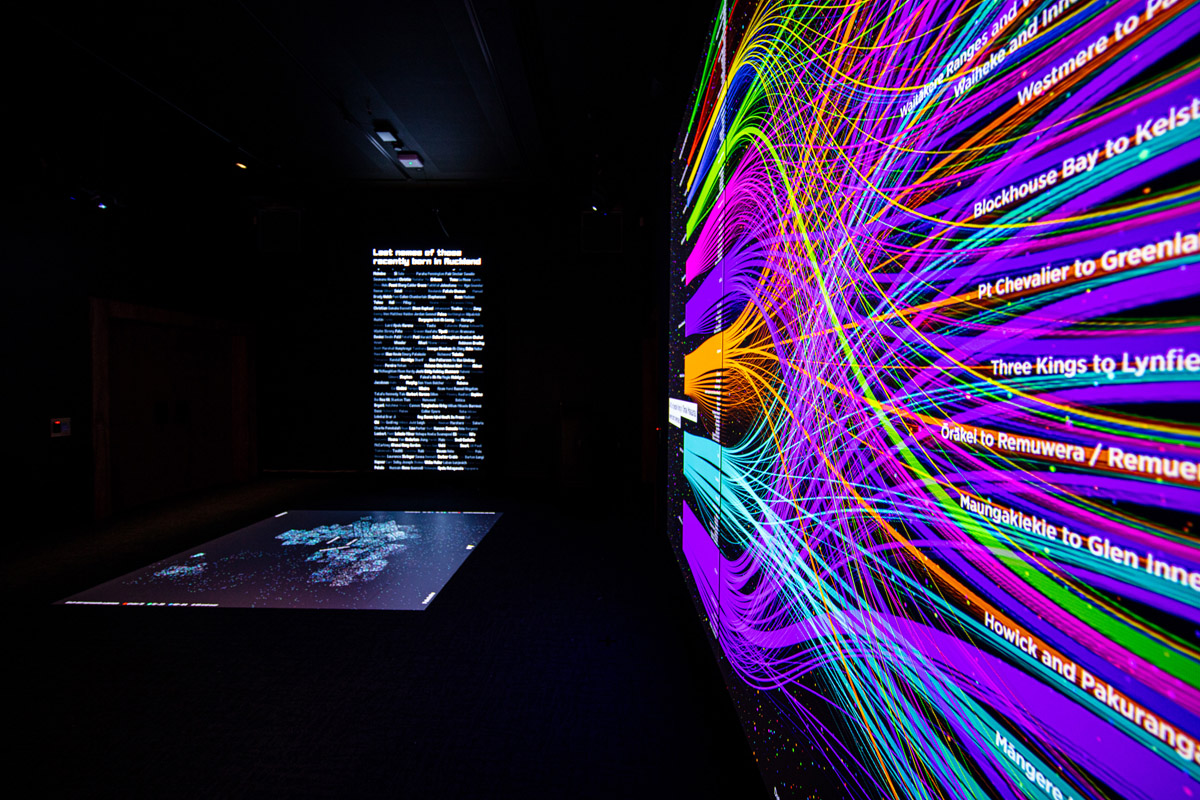
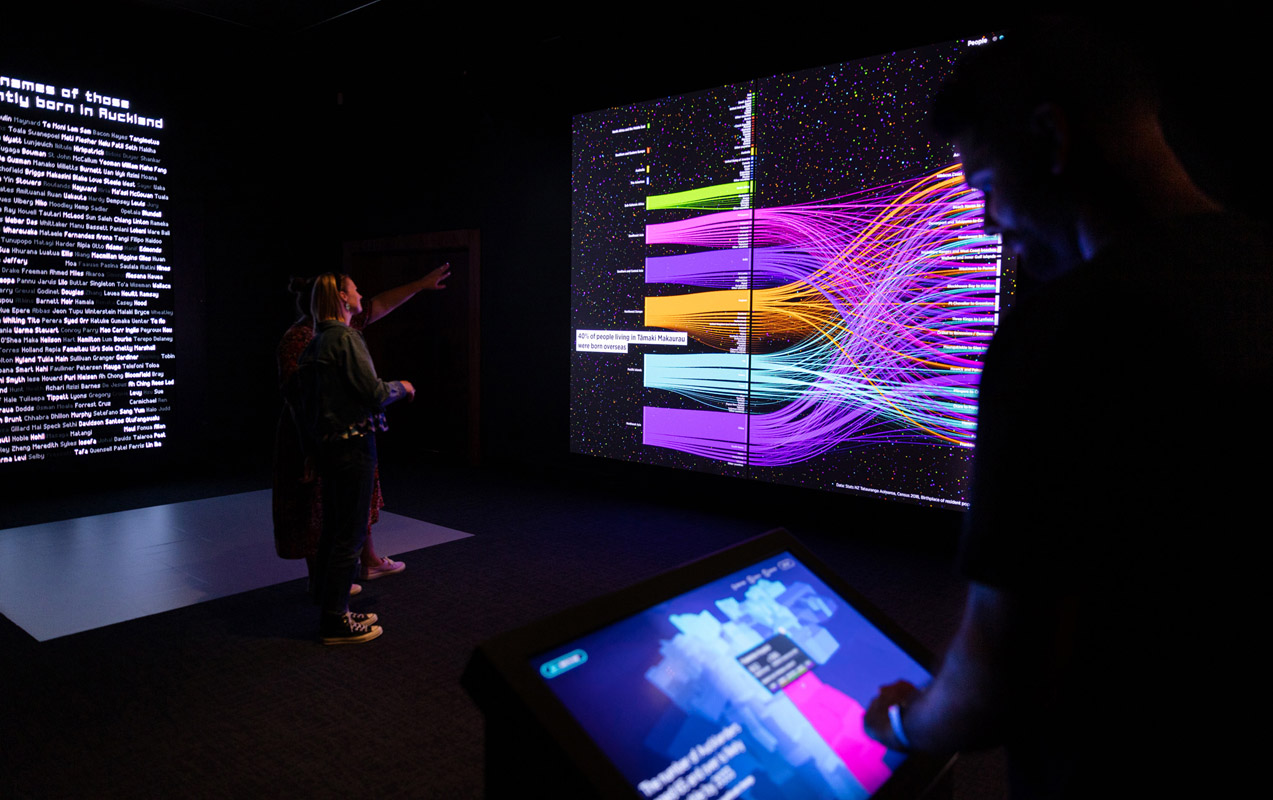
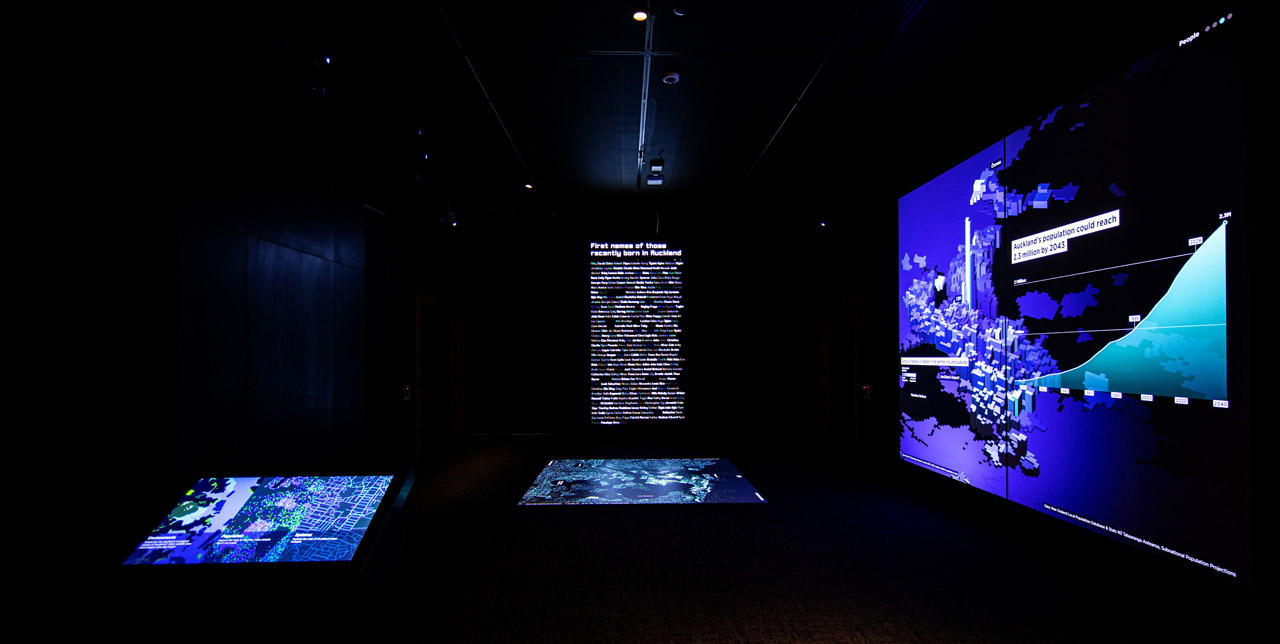
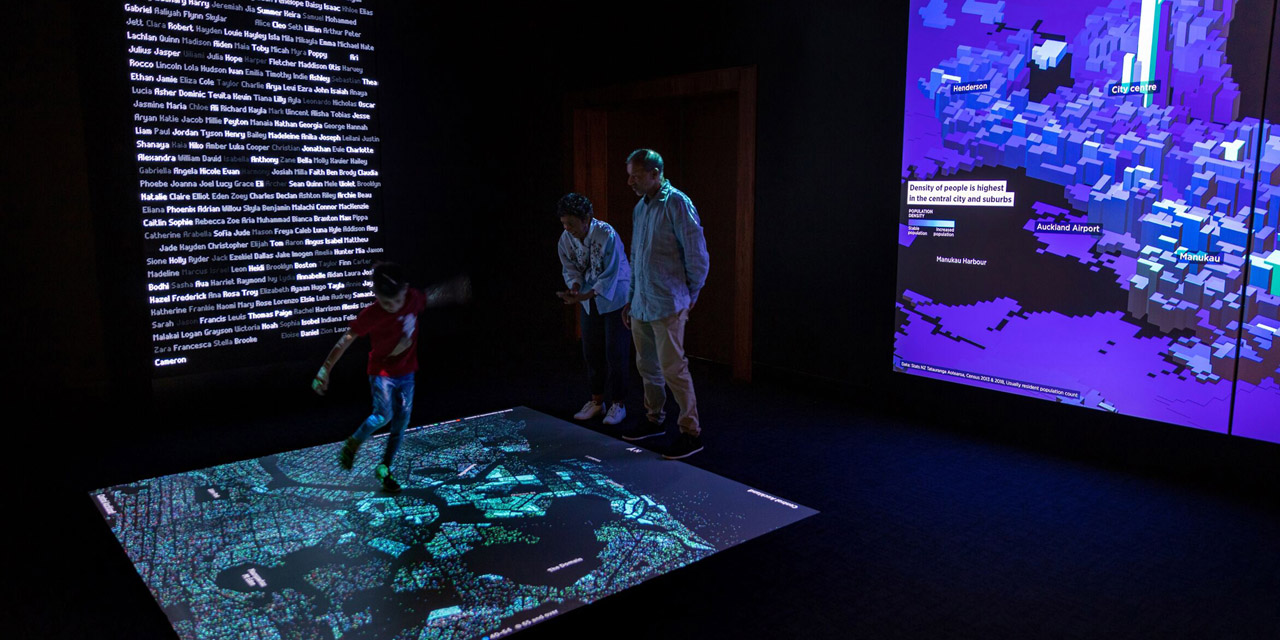
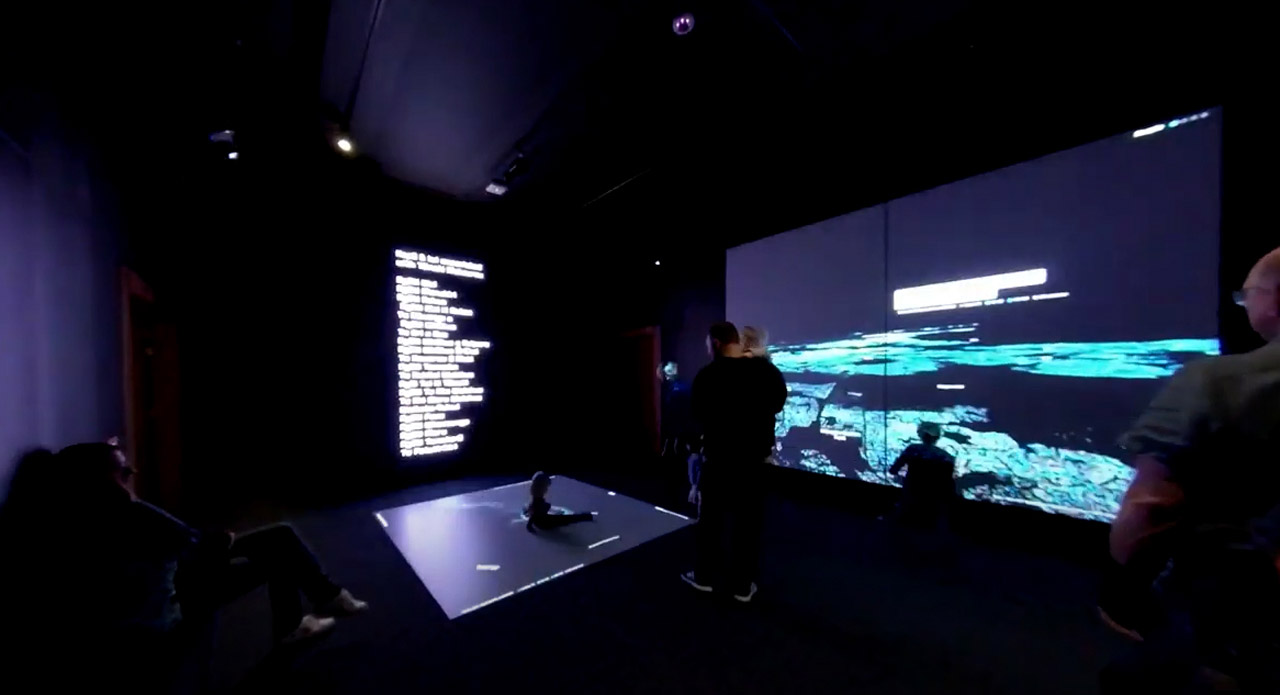
The project commenced with a series of workshops that focussed on the future of data within museum contexts and initial spatial and technical testing of design concepts. We and the AWMM team then worked with a range of government agencies to access unique datasets to be brought to life in the exhibit and design how each dataset would be visualised within the space of the exhibition. The visualisations were curated into the three main themes of the exhibition with the whole room running for 15 minutes of audio visual content. The final composition for the room was decided through iterative balancing between visualisation requirements and the soundscape.
Finalist 2021
Rarau mai Living city
OOM Creative / Auckland War Memorial Museum
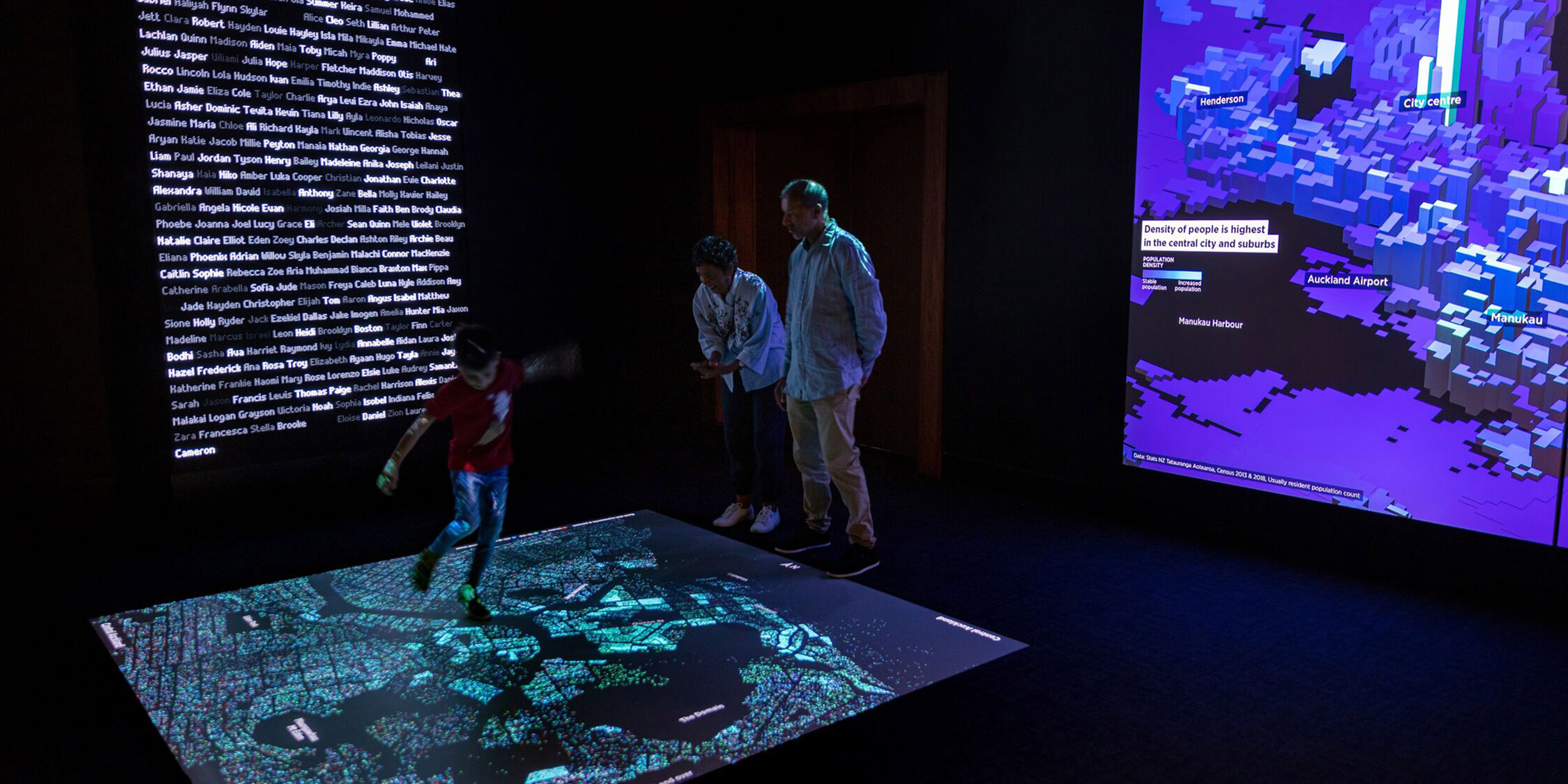
Rarau mai Living city is unique space for visitors to be immersed in the data of a city.
Immersive exhibition focussing on the using data as a creative medium to tell stories about people & place.
Design Brief
Our brief was to design an immersive exhibition space that uses data to tell stories about the city of Auckland. These stories are categorised into three main themes relating to the city: people, environments, and systems. Part of the brief was also to design the spatial configuration of the exhibit to enable these stories to be experienced, which we resolved as series or large format projections, on walls and the floor, a tall LED tower, an interactive touchscreen, and full room spatial sound-scape. A main challenge for the project was how to make data both immersive and informative, and achieve this for a range of ages and local & international visitors.
This project was developed by:
Design Process
Design Excellence
The key aspect of this project was to enable audiences to both learn from data but also to have an immersive experience of it. Different audiences require various levels of information presentation, and the elements in the room are designed to accommodate this. The floor projection is tailored to younger visitors - visuals are more abstracted renderings of the data: focussing on colours and movement, and enabling children to sit, lie or even dance within the projection. The LED tower presents data as text, data in its most minimal form, changing and reformatting for each thematic. The wall projections present the main thematic visuals for the exhibit, immersing audiences in immense data sets as a rich visual tapestry of meaning. The interactive touchscreen enables further investigation of the information for teens and older visitors while the spatial sound-scape ties the entire experience together.
Design Innovation
- Wide range of datasets included to present a rich picture of place: census, GPS, LIDAR, etc
- Use of spatial sound to make data & information more relatable
- Telling indigenous stories of place through data for diverse audiences
Design Impact
By taking a different approach to storytelling and showing data in a visually compelling way, we have been able to reach audiences who do not engage with traditional presentations of data and who may be inspired to now consider data as relevant to their lives.

Meet the Jury
Entries are judged by a panel of national and international design experts representing the diverse range of design disciplines showcased by the awards.
View the Awards Jury
Entering the Awards
The Awards are free to enter for eligible Victorian designers and architects with submissions across eight design categories.
Learn more about the guidelines and process
×
Type on the line above then press the Enter/Return key to submit a new search query